
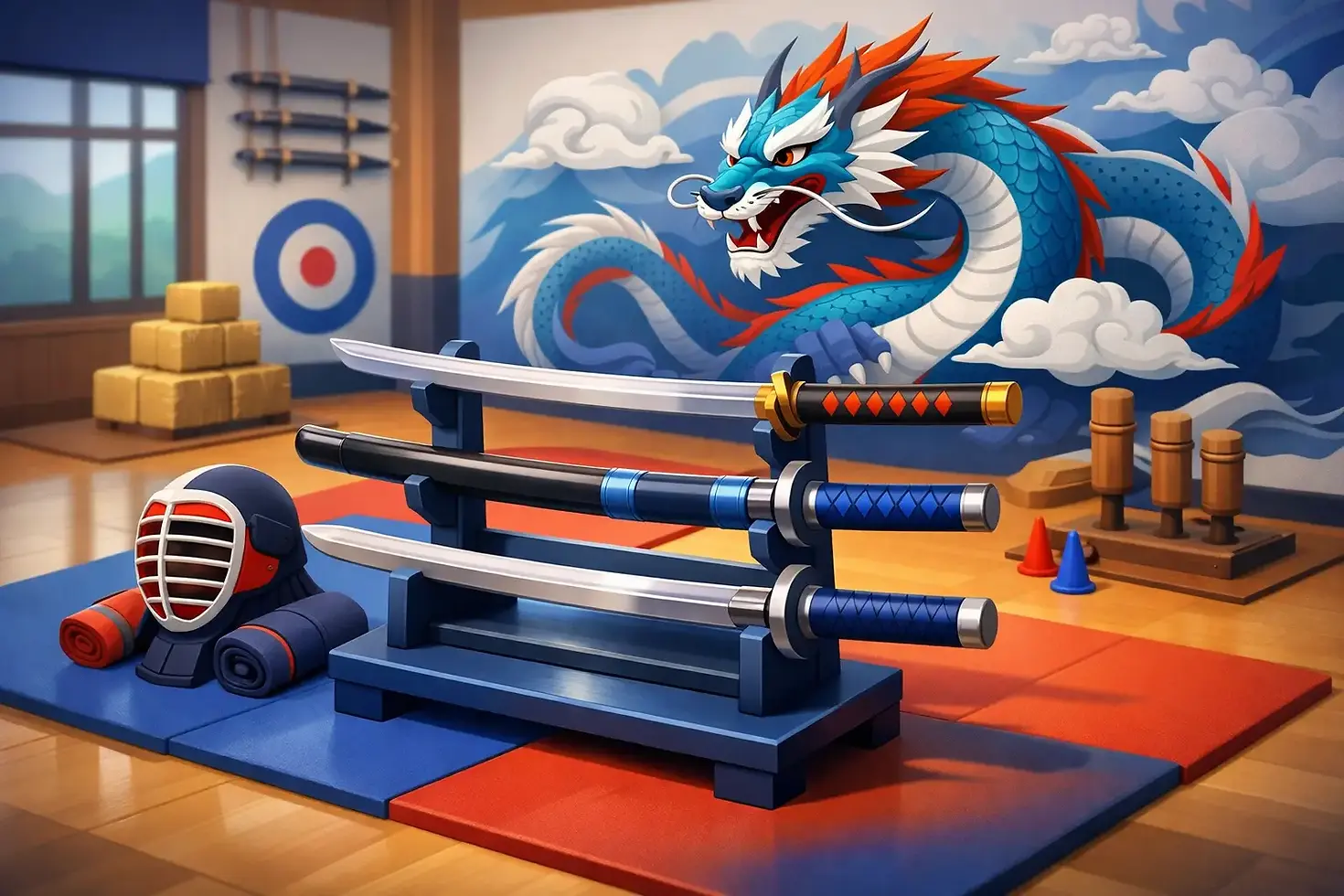
Sword Classes for Beginners: What to Expect
- Ben Sampson
- Jun 6
- 6 min read

Turning up to your first session can feel exciting and slightly daunting in equal measure. That is completely normal. Sword classes for beginners are not about being fearless on day one. They are about stepping into a structured environment, learning safely, and discovering that real progress comes from steady practice rather than natural talent.
For many people, the appeal starts with the sword itself. It is different from a standard fitness class, and far more focused than simply hitting pads or lifting weights. Sword training asks for attention, discipline and control. It challenges the body, but it also sharpens the mind. If you have been curious about starting, it helps to know what good beginner training should actually look like.
Why sword classes for beginners are different from other martial arts
A strong beginner class does not throw you into complex weapons work and hope for the best. It builds foundations first. That means posture, footwork, grip, balance, coordination and awareness. In a proper school, the sword is treated with respect from the first lesson, and that changes the atmosphere straight away.
There is usually a stronger emphasis on precision than on rushing. Beginners learn how to stand well before they learn how to move fast. They learn how to control distance before trying anything that looks advanced. That can surprise people who arrive expecting dramatic techniques in the first hour, but it is exactly what makes training effective.
There is also a mental side that many newcomers do not expect. Sword arts reward patience. If you are the sort of person who likes visible progress, that is actually a good thing. You can feel your posture improve, your reactions sharpen and your confidence grow as the basics start to settle.
What happens in a beginner sword class
Most sessions begin with a warm-up designed to prepare the whole body. Expect mobility work, light conditioning and movements that wake up the legs, shoulders and core. This matters because sword training is not only about the arms. Good technique comes from the whole body working together.
After that, you will usually move into technical basics. A beginner might practise ready positions, stepping patterns, simple cutting lines and how to hold and move the training sword correctly. These drills are repeated for a reason. Repetition builds clean movement, and clean movement becomes reliable technique.
As classes progress, students are often introduced to forms or set sequences. These are not random routines. They train timing, control, body alignment and memory. In many traditional systems, forms are a core part of development because they teach you how techniques connect rather than sitting in isolation.
Some schools also include paired drills or structured sparring patterns once a beginner has enough control. This should always be introduced carefully. Good instruction balances challenge with safety. You want a class that pushes you to improve, but never one that makes recklessness feel acceptable.
The equipment question beginners always ask
One of the biggest concerns is whether you need to buy a sword immediately. In a well-run beginner programme, the answer is usually no. New students are often introduced through basic training tools and clear supervision before they are expected to invest in their own equipment.
That matters because beginners do not yet know what feels right for them. Length, weight and handling all affect training. Starting with guidance helps you avoid buying the wrong thing too soon. It also allows you to focus on learning rather than collecting gear.
Clothing is usually simple at first. Comfortable training wear is enough for an introductory session unless the school tells you otherwise. Over time, there may be a uniform or specific equipment requirements, but that should come as part of a clear progression, not as a barrier to getting started.
What makes a good beginner programme
Not all sword classes are equal, and beginners benefit from being selective. A good class feels structured from the moment it starts. The instructor gives clear demonstrations, explains why details matter, and keeps an eye on safety without draining the energy from the room.
You should also look for a path of progression. A beginner needs more than a one-off experience. Real development comes from consistent training that builds from fundamentals into forms, sparring patterns, conditioning and deeper technical work. If a school cannot explain how a new student progresses over time, that is worth noticing.
Community matters as well. Martial arts should be disciplined, but they should not feel cold. The right environment is serious about standards while still welcoming to people at the beginning of the journey. New students improve faster when they feel supported, not judged.
For families, trust is particularly important. Clear coaching, sensible class management and qualified instructors make a real difference. Children and teenagers thrive when expectations are high but the environment remains positive and well organised.
Beginner nerves are normal
A lot of people delay their first class because they think they need to get fitter first, become more flexible first, or somehow arrive already confident. That is backwards. Training is what helps build those things.
A beginner class should meet you where you are. If your balance is shaky, that can improve. If your fitness needs work, that can improve too. If you feel self-conscious, that usually fades quickly once the session starts and your attention shifts onto the drills in front of you.
The only real requirement is willingness. If you are prepared to listen, practise and keep showing up, you can make progress. Some students move faster than others, but speed is not the same as long-term success. Consistency wins.
The benefits go beyond technique
People often start because swords are exciting. They continue because training changes more than expected. Yes, you develop coordination, strength and sharper movement, but you also build resilience. You learn to focus under pressure, to stay composed when something is difficult, and to improve through discipline rather than frustration.
That has real value for children, teenagers and adults alike. Younger students often gain confidence and self-control. Adults often find that training gives them a rare combination of physical effort and mental clarity. It can become a powerful contrast to a sedentary week or a noisy schedule.
There is also the satisfaction of belonging to a tradition with standards. In a specialist school, training feels like part of a wider path. Regular classes are only the beginning. Seminars, camps and association events can open the door to broader learning and stronger motivation.
How to choose your first class wisely
When looking at sword classes for beginners, ask simple but important questions. Is the instruction structured? Is safety taken seriously? Are beginners clearly guided, or left to copy from the edge of the room? Does the atmosphere feel disciplined and welcoming at the same time?
It is also worth checking whether the school offers a trial session. A good introduction removes some of the pressure and helps you experience the training first-hand. You can get a feel for the teaching style, the pace of the class and the community around it.
If you are in Leicestershire and want a disciplined but approachable place to start, a free introductory session with Cheong Yong Haidong Gumdo can be a strong first step. It gives beginners a chance to experience authentic Korean swordsmanship in a supportive setting, without needing to pretend they already know what they are doing.
What progress really looks like in the first few months
Progress at the beginning is rarely dramatic, but it is deeply satisfying. In the first few weeks, you may notice that movements feel unfamiliar and your concentration fades quickly. That is part of the process. Soon, the basics begin to settle. Your stance feels stronger. Your cuts become cleaner. Your footwork starts making sense.
A few months in, many beginners realise they are moving with more purpose in class and carrying themselves differently outside it as well. That is one of the quiet rewards of martial arts training. The discipline learned in the hall does not stay in the hall.
If you are considering starting, you do not need to wait for the perfect moment. You only need a place that teaches properly, a mindset willing to learn, and the courage to take the first step. The sword may draw people in, but the journey is what keeps them training.

Comments