

Top Martial Arts for Teenagers to Try Now
- Ben Sampson
- 1 day ago
- 6 min read

A teenager does not need another activity that asks them simply to turn up. They need a challenge that gives effort a purpose: a place to build confidence, learn self-control, get stronger and belong to something worthwhile. The top martial arts for teenagers do exactly that, but the best choice depends on the young person in front of you.
Some teenagers want high-energy kicking and competition. Others enjoy close technical work, practical self-defence or the focus of a traditional weapons discipline. The right class should feel demanding without being intimidating, structured without taking the enjoyment out of training. It should also give students a clear path forward, so they can see how consistent practice becomes real progress.
What makes a martial art right for a teenager?
Teenage years bring rapid changes in confidence, strength, concentration and social pressure. A good martial arts school meets students at their current level, then steadily raises the standard. They learn to listen, practise with care, work through frustration and respect both their training partners and themselves.
Look beyond flashy techniques or a fast route to a coloured belt. The strongest programmes provide qualified instruction, clear safety standards, age-appropriate conditioning and a welcoming group culture. Teenagers should feel challenged, but never left to prove themselves through recklessness.
It also helps to consider what will hold their interest after the excitement of the first few sessions. A student who loves precision may thrive with forms and weapons. One who enjoys movement and athletic kicking might prefer taekwondo. Another may respond best to grappling and controlled throws. Interest creates commitment, and commitment is where the deeper benefits begin.
Top martial arts for teenagers and what they teach
Haidong Gumdo: focus, form and Korean swordsmanship
Haidong Gumdo is a distinctive choice for teenagers who want more than a standard fitness class. This Korean sword art combines disciplined movement, forms, cutting techniques and physical conditioning. It asks students to be present. Every stance, step and strike has a purpose, so rushing or switching off quickly becomes obvious.
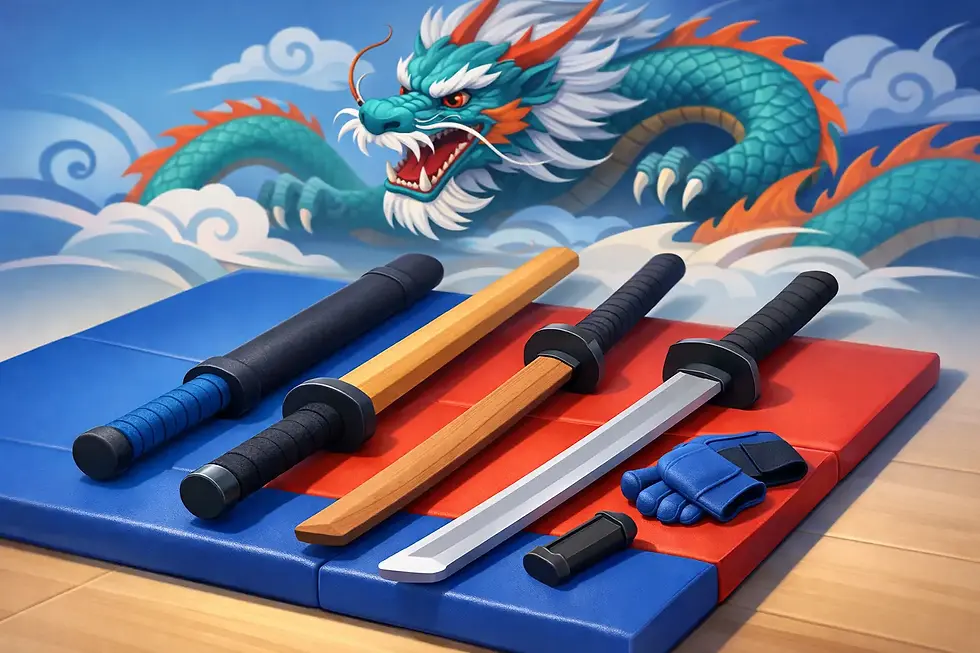
For many teenagers, that focus is a powerful draw. Training with a sword carries a sense of responsibility and tradition that encourages maturity. Beginners start with safe training equipment and clear rules, developing control before moving towards more advanced work. The goal is never to swing wildly. It is to build accuracy, balance, coordination and composure.
Haidong Gumdo can particularly suit teenagers who enjoy individual improvement as much as group training. There is always another detail to refine: a stronger stance, a cleaner line, a more confident form. It offers a demanding physical outlet while giving the mind something equally valuable to work on.
At Cheong Yong Haidong Gumdo, students can also find a wider journey through structured sessions, seminars, camps and national association events. That sense of progression can be highly motivating for a teenager ready to commit to a specialist discipline.
Karate: strong foundations and self-discipline
Karate remains one of the most recognised martial arts for young people, and for good reason. Traditional classes often place great emphasis on posture, striking technique, forms, etiquette and control. For a teenager who benefits from a clear routine, karate can provide a strong framework.
The training is often accessible to complete beginners, regardless of whether they see themselves as naturally sporty. Over time, students develop flexibility, core strength and sharper coordination. Just as importantly, they become used to practising a skill repeatedly until it improves. That lesson carries into schoolwork, music, sport and everyday responsibilities.
There are different styles of karate, so parents should watch a class before deciding. Some schools lean heavily into competition, while others focus more on traditional technique and personal development. Neither approach is automatically better. The right fit depends on the teenager's goals and the quality of teaching.
Taekwondo: athletic movement and confident kicking
Taekwondo is an excellent option for teenagers who enjoy speed, movement and dynamic kicking techniques. Classes can be lively and physically demanding, with plenty of work on flexibility, footwork and timing. Students who find gym-based exercise dull may enjoy the sense of momentum and achievement that comes from learning an impressive new kick.
It can also offer clear goals through grading and competition opportunities. For some teenagers, having a date in the diary gives their training direction. Others may prefer to train without competing, and a good club should respect that choice.
The trade-off is that taekwondo's kicking emphasis will not suit every personality. A teenager who prefers slower, detail-led training or who is more drawn to traditional weapon work may find another art more engaging. A trial session is the simplest way to find out.
Judo: resilience, balance and calm under pressure
Judo teaches teenagers how to use balance, timing and leverage rather than relying on size alone. Students learn throws, holds and safe falling skills in a carefully supervised setting. It is physically demanding, but it also rewards patience and intelligent decision-making.
This can be especially valuable for teenagers who need to understand that setbacks are part of learning. A technique may fail several times before the timing clicks. With good coaching, that is not embarrassing - it is the work. Judo students learn to reset, think clearly and try again.
Because it involves close contact, it is important to choose a club with excellent supervision and a respectful training culture. Parents should feel comfortable asking how sessions are structured, how beginners are introduced and how instructors manage differences in size and experience.
Brazilian jiu-jitsu: problem-solving through grappling
Brazilian jiu-jitsu, often known as BJJ, is another grappling art that appeals to teenagers who enjoy solving puzzles. Rather than relying on striking, it focuses on positioning, escapes, control and submissions. A smaller student can make meaningful progress by learning technique, patience and awareness.
BJJ can be hugely confidence-building because it makes students think under pressure. They learn that panicking wastes energy, while breathing, observing and choosing the next sensible move brings better results. Those are useful habits far beyond the training floor.
As with judo, the quality of the club matters greatly. The atmosphere should be disciplined and supportive, with instructors who pair students thoughtfully and make safety a constant priority. Teenagers should leave training tired and proud, not anxious about returning.
How to choose between martial arts classes
Start with the teenager's motivation rather than what friends are doing. Do they want to build confidence, get fitter, learn self-defence, compete, explore traditional culture or take on a unique challenge? There is no wrong answer, but being honest about it makes the choice easier.
Then watch the class environment. Are instructors attentive and calm? Do more experienced students set a positive example? Is there a clear structure to the session? A good school does not need to shout about discipline because you can see it in the way people train.
Ask about the pathway too. Teenagers often flourish when they can work towards gradings, demonstrations, events or advanced technical goals. The pathway should be ambitious but realistic. Progress earned through regular practice means more than a belt awarded too easily.
Finally, give the student a chance to try before making a decision. The best martial art on paper is not always the one that makes them want to return next week. Their response after the first session matters: did they feel welcomed, challenged and excited to improve?
The benefits that last beyond the class
Martial arts training will not make every difficult teenage moment disappear. It can, however, give a young person practical ways to meet challenges. They become more familiar with effort, more comfortable being a beginner and more capable of recovering when something does not go their way.
The physical gains are clear: better fitness, mobility, coordination and body awareness. The quieter gains are often even more significant. Teenagers learn to arrive on time, wear the right kit, listen carefully and take responsibility for their own progress. In a supportive club, they also gain a community that values character as much as ability.
Choose a class with standards, encouragement and room to grow. When a teenager finds a martial art that captures their interest, each session becomes more than exercise - it becomes a place to stand taller, train with purpose and discover what steady discipline can achieve.

Comments